
Tag: studentvisa

  • HND IN HEALTH AND SOCIAL  CARE PRACTICE

    HND IN HEALTH AND SOCIAL CARE PRACTICE

    Birmingham
    Birmingham
    Health And Care

    The healthcare sector in the UK is fast-paced and constantly evolving, making it one of the largest employment industries with a high demand for skilled and proactive professionals. Our HND in Health and Social Care Practice provides the perfect foundation for a fulfilling career for those passionate about helping others. With 450 hours of built-in work placement, this course offers valuable real-world experience.


    The healthcare sector in England employs approximately 1.3 million people in a wide range of career paths and settings. This course opens the door to a career in healthcare and can lead to further specialist study, depending on your chosen career path.

    Our HND in Health and Social Care Practice provides you with a solid understanding of the healthcare environment in England, through a combination of work-based experience and practical study. You’ll complete work experience in a health and social care setting, giving you the practical skills and knowledge to pursue a career in this rewarding sector.

    Studying our HND in Health and Social Care Practice will give you transferrable skills that can be applied in many different healthcare careers. It will also prepare you for Undergraduate study in specialist areas such as health and social care or public health.

    For those already working in healthcare, it provides the opportunity to further develop your career through enhancing your skills, knowledge and understanding within your role. It will also help you plan a clear path into future healthcare roles.

    • Are you looking to begin a career in the healthcare sector?
    • Do you want to specialise in a particular healthcare practice?
    • Are you committed to Continuing Professional Development (CPD)?

    This qualification will provide all the foundational building blocks you need for a fulfilling and successful career in the healthcare sector.

    450 Hours of Work Placement
    On this course, you’ll conduct 450 hours of work placement over the two years of this programme. You’ll will benefit greatly from the placement as you put the theories learned in the classroom into real-world practice.

    GBS students have gained work experience at a number of well-known organisations such as:
    • Birmingham Children’s Trust
    • Manchester Prime Care
    • Omega Health Care Solutions
    • Quality Care Resourcing
    • Sanctuary Care 
    • St Catherines Care Home
    • Sweaty Betty Foundation
    • Vestacare
    • Wigan Stars

    Year 1:

    • Changing Perspectives in Public Health (15 credits)
    • Compassionate Care and Values-based Practice (15 credits)
    • Developing Leadership Skills (15 credits)
    • Developing Professional Practice (30 credits)*
    • Evidence Based Practice (Pearson-set) (15 credits)
    • Planning Care in Practice (15 credits)
    • Teamwork and Communication (15 credits)

    Year 2:

    • Establishing Professional Practice (30 credits)
    • Facilitating Change for Quality Care (15 credits)
    • Growing Careers in Health and Care (15 credits)
    • Innovation and Improvement through Participatory Action Research (Pearson-set) (30 credits)*
    • Leadership, Mentoring and Coaching Others (15 credits)
    • Leading Quality Care (15 credits)

    *Please note you’ll conduct 225 hours of work placement on this module.

    There are no formal examinations required for this course. Assessments are undertaken in various ways:

    • Presentation
    • Writing an assignment
    • Analysing a case study
    • Personal discussion
    • Completing an e-Portfolio of evidence

    Writing Reports:

    You will be required to work in your own time to complete research, homework tasks or group work. Self-study is vital to your success on this course and lecturers will give you guidance on how best to approach this throughout the study period.

    Applicants Must be Aged 18+ and: 

    • Have a Level 3 qualification or an Access to Higher Education certificate.
    • Demonstrate English proficiency: GCSE 4/C or CEFR B2. If you do not have this qualification, you can carry out an English test provided at a GBS campus.
    • Pass an Academic interview.

    Applicants Aged 21+:

    • We welcome applications from students 21+ who do not match the standard entry requirements but who can demonstrate willingness and commitment to studying this subject, and who can evidence academic, professional or vocational experience in a related field.
    • Demonstrate English proficiency: GCSE 4/C or CEFR B2. If you do not have this qualification, you can carry out an English test provided at a GBS campus.

    Important Information:

    • Please note an Enhanced DBS check is normally required prior to starting your course. This is essential as you will need it before commencing your work placement as the Enhanced DBS check helps employers make informed decisions about hiring individuals who will work closely with children, adults in need of care and support, or other vulnerable groups.
    • You are required to submit their CV prior to starting your course.

    Next Steps: 

    1. Please fill out an application form by clicking on the ‘Apply Now’ button on this page.
    2. Send your supporting documents when requested by GBS.
    3. A panel interview takes place to assess your application. 
    4. GBS make a final decision on your application.

    Fees

    Course NameFees for June 2025Fees for New and Existing Students from August 2025
    HND in Health and Social Care Practice – (Pearson)£6,000 (per year)£6,355 (per year)

    Following the Government’s announcement that Undergraduate tuition fees for UK Undergraduate students will change for students enrolling or re-enrolling after 1 August 2025 GBS has updated the Fees information, as shown above. 

    Tuition fees for Home students may increase in subsequent years both for new and continuing students in line with an inflationary amount determined by the government.

    Funding Your Study

    You may be able to borrow money from the UK Government to help pay your tuition fees and to help with your living costs while studying.

    This could take the form of a Tuition Fee Loan to cover the cost of your tuition fees, and/or a Maintenance Loan to support you with living costs whilst studying.

    Please visit our Fees & Funding page for more information.

    The learning, practice and progression you make during your HND in Health and Social Care Practice studies will help you build a platform for future success in your career — whether you decide to take a private, social or public healthcare pathway. You will have the ability to pursue a career in Healthcare Management, Care Home Managers, Practice/Clinic Administration and Patient Services.

    Secondly , you can do Top-Up at Bachelor Health and Social Care or Nursing

    ? Sallary Table

    Role / SectorTypical Rate or MedianApprox. Annual Salary
    NHS Care Assistants (Band 2–3)£13–14/hour£24 k–£27 k
    NHS Band 4–5 (e.g. OT, Social Worker)Mid‑point AfC band pay£35 k–£36 k
    Adult Social Care Worker (national avg)£13.54/hour~£24 k
    Senior Care Worker (care homes, home care)—~£24–25 k

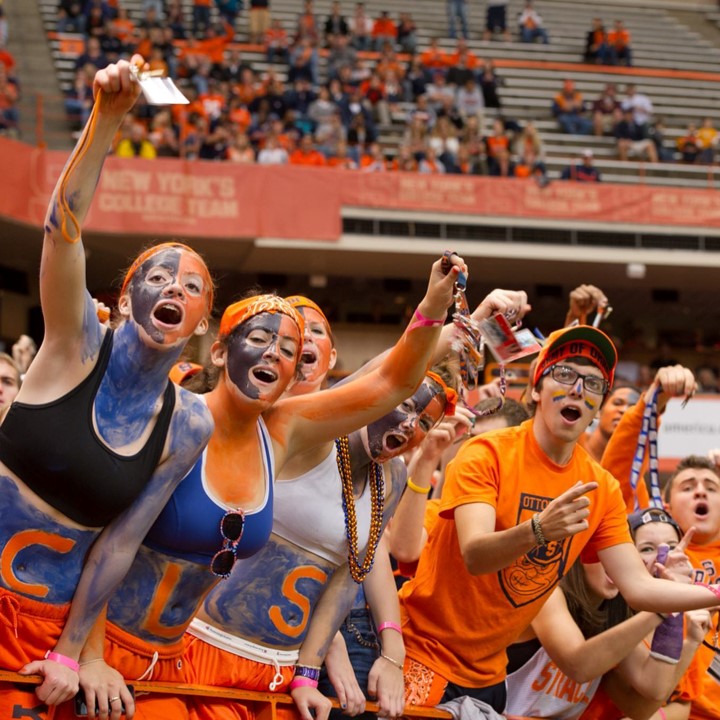
  • Syracuse University-USA

    Syracuse University-USA

  • USA Student Visa

    USA Student Visa

    US Student Visa

    Visa Types:

    • F-1 Visa: Academic studies (college/university) or English language programs.
    • J-1 Visa: Exchange programs (high school/university level).
    • M-1 Visa: Non-academic/vocational training (e.g., technical courses).

    Prerequisite:
    Acceptance from a SEVP-certified institution, which issues:

    • Form I-20 (for F/M visas).
    • Form DS-2019 (for J visas).

    Key Government Agencies

    AgencyRole
    U.S. State DepartmentIssues visas via embassies/consulates.
    Department of Homeland Security (DHS)Monitors entry/status via:
      – SEVPOversees certified schools.
      – CBPInspects students at ports of entry.
      – ICE/SEVISTracks student records (I-20/DS-2019).

    F-1 Visa Application Process

    Core Requirements:

    • Valid passport.
    • Proof of English proficiency (e.g., TOEFL/IELTS scores).
    • Financial evidence: Bank statements/sponsor letters showing ability to cover tuition + living costs.
    • Non-immigrant intent: Ties to home country (e.g., family, job offer, assets) proving you’ll return after studies.

    Critical Steps:

    • Pay the SEVIS fee ($350 for F/M, $220 for J) before the interview.
    • Complete DS-160 online visa application.
    • Visa Interview:
      • Conducted at a U.S. embassy/consulate.
      • Officer assesses intent, finances, and eligibility.
      • Digital fingerprints collected (biometrics).
    • Passport submission: For visa stamping if approved.

    Important Considerations

    • Visa Insurance Fee?
      Clarification: The SEVIS fee is mandatory but does not guarantee visa approval. It funds the SEVIS database tracking students.
    • Travel Warning:
      Do not book flights until the visa is physically stamped in your passport. Processing times vary.
    • Post-Approval:
    • M/J visas may require additional reciprocity fees.
    • All students must clear CBP inspection upon entry using their visa + I-20/DS-2019.
    • Maintaining Status:
      Attend the school listed on your I-20/DS-2019, enroll full-time, and limit off-campus work.

    Common Pitfalls to Avoid

    ❌ Underestimating funds needed (include tuition + living costs for 1+ years).
    ❌ Weak proof of home-country ties (e.g., no property, job prospects, or family obligations).
    ❌ Booking flights before visa approval.
    ❌ Errors on DS-160 or I-20/DS-2019 forms (match passport exactly).

    Need Further Help?

    This process is rigorous but manageable with thorough preparation. Always prioritize official government guidance over third-party advice! ?✈️?

    Frequently Asked Questions

    A U.S. study visa (typically an F-1 or J-1 visa) offers numerous significant advantages for international students:

    1. Access to World-Class Education:
      • Top-Ranked Institutions: Study at globally renowned universities and colleges known for cutting-edge research, exceptional faculty, and rigorous academic programs.
      • Diverse Program Options: An unparalleled range of undergraduate, graduate, and specialized programs across virtually every field imaginable.
      • Flexible Education System: The US system often allows for exploring different subjects before declaring a major and encourages interdisciplinary learning.
    2. Enhanced Career Prospects & Global Recognition:
      • Highly Valued Credential: A degree from a U.S. institution carries significant weight and recognition worldwide, enhancing your resume and employability globally.
      • Practical Training Opportunities:
        • CPT (Curricular Practical Training): Allows off-campus work directly related to your major during your studies.
        • OPT (Optional Practical Training): Grants permission to work in your field of study for up to 12 months after graduation (crucial for gaining US work experience).
        • STEM OPT Extension: Graduates in Science, Technology, Engineering, and Mathematics fields can extend their OPT by an additional 24 months (totaling 3 years of post-graduation work).
    3. Cultural Immersion & Global Perspective:
      • Diverse Environment: Experience life in a multicultural society, interact with people from all over the world, and broaden your cultural understanding.
      • Develop Independence & Adaptability: Living and studying abroad fosters self-reliance, problem-solving skills, and the ability to thrive in new environments.
      • New Perspectives: Exposure to different ideas, teaching methods, and ways of life challenges assumptions and fosters a more global mindset.
    4. Networking Opportunities:
      • Build a Global Network: Connect with professors, industry professionals, and fellow students from diverse backgrounds, creating invaluable personal and professional connections for your future career.
      • Access to Alumni Networks: Tap into the extensive and often powerful alumni networks of U.S. universities.
    5. Research & Innovation Exposure:
      • State-of-the-Art Facilities: Access advanced laboratories, libraries, and technology resources often at the forefront of research and innovation.
      • Opportunity to Contribute: Participate in groundbreaking research projects alongside leading experts in your field.
    6. Improved English Language Skills:
      • Immersion Environment: Living and studying in an English-speaking country is the most effective way to achieve fluency and proficiency, a highly valuable asset in the global job market.
    7. Personal Development:
      • Develop greater confidence, resilience, and cross-cultural communication skills.
      • Gain a deeper understanding of yourself and your capabilities.
    8. Potential Pathway for Future Immigration (Not Guaranteed):
      • Gaining U.S. work experience through OPT/STEM OPT can sometimes open doors to longer-term work visas (like H-1B) or potentially employment-based green cards, though this is a complex and uncertain process separate from the study visa itself.

    Important Considerations:

    • Visa Compliance: Maintaining your student status is crucial (full course load, limited on-campus work only unless authorized for CPT/OPT, keeping your I-20/DS-2019 valid).
    • Cost: U.S. education and living expenses are high. Careful financial planning is essential.
    • Application Rigor: The application process (university admission + visa) is competitive and requires significant documentation.

    Transitioning from a U.S. study visa (F-1 or J-1) to a permanent resident visa (Green Card) is not a direct or simple process. There is no single “change” option. Instead, you typically need to qualify for a Green Card through a separate immigration pathway after completing your studies, often while using temporary work authorization like OPT/STEM OPT or another visa (like H-1B).

    Here are the most common pathways, along with key challenges:

    1. Employment-Based Immigration (Most Common Path for Graduates):
      • Step 1: Find an Employer Sponsor: You need a U.S. employer willing to sponsor you for permanent residency. This is a significant commitment for them.
      • Step 2: Obtain a Temporary Work Visa (Often Essential First): Most employers sponsor you first for a temporary work visa like the H-1B (specialty occupations) while starting the lengthy Green Card process. Winning the H-1B lottery is highly competitive.
      • Step 3: The PERM Labor Certification Process: The employer must prove they couldn’t find a qualified U.S. worker for your position (a complex, costly, and time-consuming process taking 1-2+ years).
      • Step 4: Immigrant Petition (I-140): Once PERM is approved, the employer files Form I-140 to classify you under an employment-based preference category (EB-1, EB-2, or EB-3 are most common for professionals).
      • Step 5: Wait for Priority Date: Your place in line is determined by your “priority date” (when PERM or I-140 was filed). Wait times vary drastically by country of birth and category (e.g., India/China face very long waits in EB-2/EB-3).
      • Step 6: Adjustment of Status (I-485) or Consular Processing: When your priority date is current, you file to adjust your status to permanent resident within the US or go through consular processing abroad.
    2. Family-Based Immigration:
      • Marriage to a U.S. Citizen: This is often the fastest path if you marry a U.S. citizen. You can apply for Adjustment of Status (I-485) while legally in the U.S. (even on F-1/J-1, though intent matters). Requires proving a bona fide marriage.
      • Close Family Relationship: If you have an immediate relative who is a U.S. citizen (spouse, parent if you are under 21, or adult child) or a Lawful Permanent Resident (spouse or unmarried child), they can petition for you. Wait times apply for LPR sponsorships and more distant relatives.
    3. EB-1 Extraordinary Ability or EB-2 National Interest Waiver (NIW):
      • EB-1A (Extraordinary Ability): For individuals with sustained national/international acclaim (e.g., Nobel laureates, significant awards, major publications). No job offer or PERM required.
      • EB-2 NIW: For individuals whose work is in the “national interest” of the U.S. (e.g., advanced research, public health, economic development). Requires demonstrating exceptional ability and that waiving the job offer/PERM requirement benefits the nation. No employer sponsor required. These are high bars but avoid the PERM process.
    4. Investor Visa (EB-5):
      • Requires a substantial investment ($800,000 – $1,050,000+ depending on location) in a new commercial enterprise that creates at least 10 full-time jobs for U.S. workers. Significant capital required.
    5. Diversity Immigrant Visa Program (DV Lottery):
      • An annual random lottery for individuals from countries with low rates of immigration to the U.S. Chances of winning are very low. Winning allows you to apply for a Green Card.
    6. Special Immigrant Categories:
      • Includes certain religious workers, Afghan/Iraqi translators, employees of international organizations, etc. Specific requirements apply.

    Key Challenges & Considerations:

    • Time: The process takes years (often 5-10+ years for employment-based categories if born in India/China).
    • Complexity: Immigration law is extremely complex. Navigating PERM, I-140, and I-485 requires meticulous documentation.
    • Cost: Significant legal fees, filing fees ($thousands), and potentially costs associated with labor certification.
    • Maintaining Legal Status: You must maintain valid legal status (e.g., F-1 OPT/STEM OPT, H-1B, O-1, L-1) throughout the entire process until your Adjustment of Status application is filed and accepted. Falling out of status can make you ineligible.
    • Intent: F-1 visas require non-immigrant intent. Applying for a Green Card demonstrates immigrant intent. This is generally only safe after completing your studies and while on OPT or another work visa.
    • H-1B Cap Lottery: Winning the H-1B lottery (held annually in March/April) is often a critical hurdle. Chances are roughly 10-25% depending on the year.
    • Country Caps: Severe backlogs exist for employment-based Green Cards for individuals born in India, China, Mexico, and the Philippines.
    • Changing Laws/Policies: Immigration rules and processing times can change.

    Critical First Steps After Graduation:

    1. Utilize OPT/STEM OPT: Gain valuable U.S. work experience in your field. This is crucial for finding an H-1B sponsor or building a case for EB-1A/NIW.
    2. Seek H-1B Sponsorship: Actively look for employers willing to sponsor H-1Bs. Understand the lottery timelines.
    3. Consult an Immigration Attorney: This process is too complex to navigate alone. A qualified immigration lawyer is essential to evaluate your options, prepare petitions correctly, and manage your case. Do not rely solely on online forums or non-lawyer consultants.

    In short: There’s no direct conversion. You transition by qualifying for a Green Card through employment sponsorship (most common, but long and complex), family ties, extraordinary ability, investment, or luck in the diversity lottery. Maintaining valid work status (like H-1B) during the multi-year wait is critical. Consult an experienced immigration attorney early in your planning.

    Yes, you can bring certain family members to the USA while you hold a valid F-1 student visa or J-1 exchange visitor visa, but there are specific rules and limitations. Here’s a breakdown:

    ✅ Who You Can Bring

    1. F-1 Visa Holders:
      • Spouse: Eligible for F-2 dependent visa.
      • Unmarried Children under 21: Eligible for F-2 dependent visa.
    2. J-1 Visa Holders:
      • Spouse: Eligible for J-2 dependent visa.
      • Unmarried Children under 21: Eligible for J-2 dependent visa.

    ❌ Who You CANNOT Bring

    • Parents, siblings, grandparents, or other extended family members are NOT eligible for dependent visas under F-1 or J-1 status.

    ? Requirements & Process

    1. Proof of Relationship: You must provide legal documents (marriage certificate for spouse, birth certificates for children) proving the family relationship.
    2. Financial Proof: You must demonstrate sufficient funds to cover the living expenses of all dependents in the US, in addition to your own tuition and living costs. This is a strict requirement.
    3. Form I-20 (F-2) or Form DS-2019 (J-2): Your US school (for F-1) or program sponsor (for J-1) must issue a separate Form I-20 (for F-2 dependents) or Form DS-2019 (for J-2 dependents) for each family member.
    4. Dependent Visa Application: Each family member must:
      • Complete the Online Nonimmigrant Visa Application (Form DS-160).
      • Pay the visa application fee (MRV fee).
      • Schedule and attend a visa interview at a US embassy or consulate in their home country or place of legal residence.
      • Provide required documents (passports, photos, your valid visa/I-20/DS-2019 copies, proof of relationship, proof of finances).
    5. Timing: They can apply at the same time as you or after you have already obtained your F-1/J-1 visa and entered the US. They cannot enter the US before you on a dependent visa.

    ⚠️ Key Considerations & Restrictions

    1. Study Limitations (F-2):
      • F-2 spouses and children are PROHIBITED from enrolling in full-time degree programs.
      • They can take avocational or recreational classes part-time (e.g., cooking, art, language classes for personal enrichment).
      • If they wish to pursue full-time academic studies, they must apply for and change to their own appropriate student visa (F-1 or M-1).
    2. Study Limitations (J-2):
      • J-2 dependents ARE ALLOWED to study full-time or part-time at any level (elementary school, high school, college, university) without needing to change status.
    3. Work (F-2):
      • F-2 dependents are NOT allowed to work in the USA under any circumstances.
    4. Work (J-2):
      • J-2 spouses MAY apply for work authorization from USCIS (by filing Form I-765) after arriving in the US.
      • Their employment must be for purposes other than supporting the J-1 principal (e.g., personal career goals, supplemental income). Income cannot be the family’s primary support.
      • J-2 children are generally not eligible for work authorization.
    5. Maintaining Status:
      • Your dependents’ legal status in the US is tied to your status. If you lose your F-1 or J-1 status (e.g., drop below full-time enrollment without authorization, complete your program, violate visa terms), your dependents also lose their status.
      • Their authorized stay period is linked to yours (based on the program end date on your I-20/DS-2019 plus grace periods).
    6. Health Insurance: Strongly recommended, often required. Medical care in the US is extremely expensive. Ensure your dependents have adequate health insurance coverage meeting your school’s or program’s requirements.
    7. Immigration Intent: The F-2 and J-2 visas are non-immigrant visas. While dependents can potentially change status later (e.g., J-2 to F-1, or eventually apply for a green card if eligible), entering on F-2/J-2 requires the intent to leave the US when the principal’s status ends.